Export
The Export menu writes your note in four formats, plus packages. Every export leads with the note’s name as a small mono label, and the block-ruler numbers come along where the format allows.
Formats
- Markdown — a portable
.mdplus a.assets/folder holding every image, sketch render, and video-note thumbnail. Comments become footnotes. - HTML — one self-contained file you can send anywhere. Colors, highlights, syntax-colored code, and tables survive exactly; the page keeps the app’s look, wide tables run full width; annotations ride as layers behind an Annotations toggle; comment threads pop up on hover; click any image — table cells and video-note frames included — for the built-in lightbox.
- Word (
.docx) — comments arrive as native Word review comments; code blocks keep their syntax colors; media ink is baked into the images. - PDF — print-ready pages with images fitted, tables normalized to the page, and annotated PDF pages exported as baked images.
Copy as Markdown (⇧⌘C) puts the selection — or the whole note — on the clipboard in the same Markdown dialect, no files written.
Export Options
Options appear only when they apply to your note:
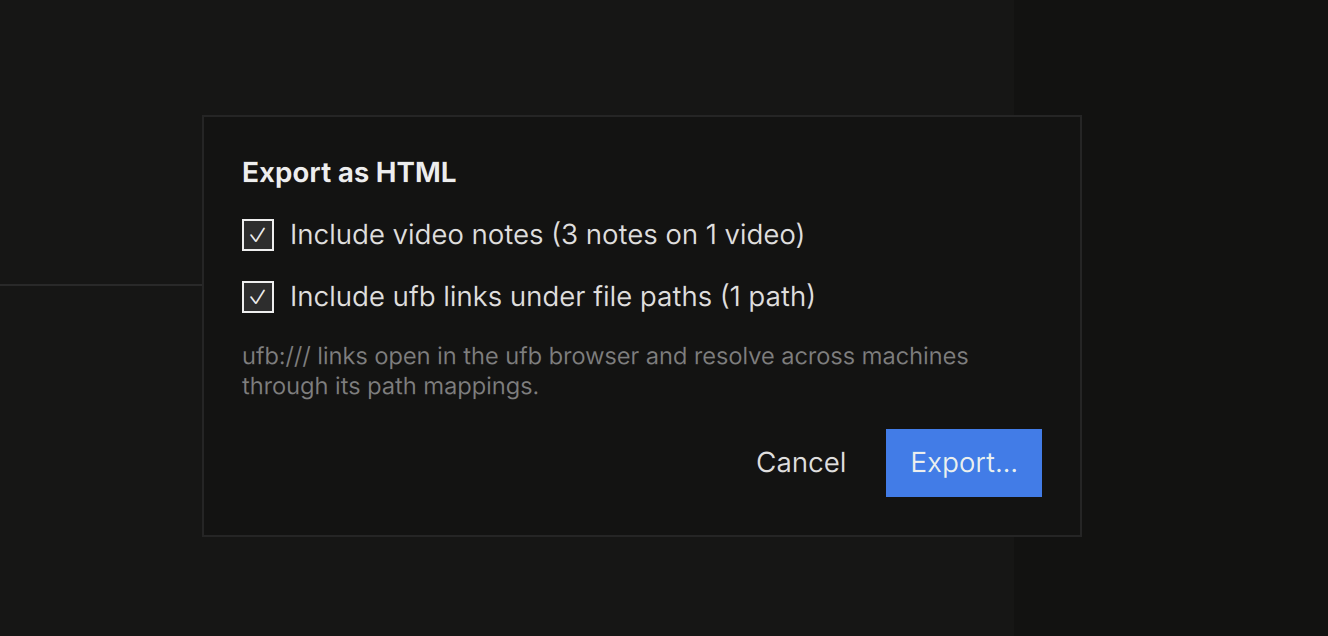
- Include video notes — QCView-style notes render under each video, annotated frames included.
- Include ufb links (off by default, remembered) — adds a clickable
ufb:///deep link under every file path in the export. Anyone with ufb installed clicks the link and lands on that file in their browser — cross-platform, resolved through ufb’s own path mappings.
References
Videos, PDFs, and file attachments export as a poster image plus a reference card — name, full path, and metadata — so a reader can find the real file:
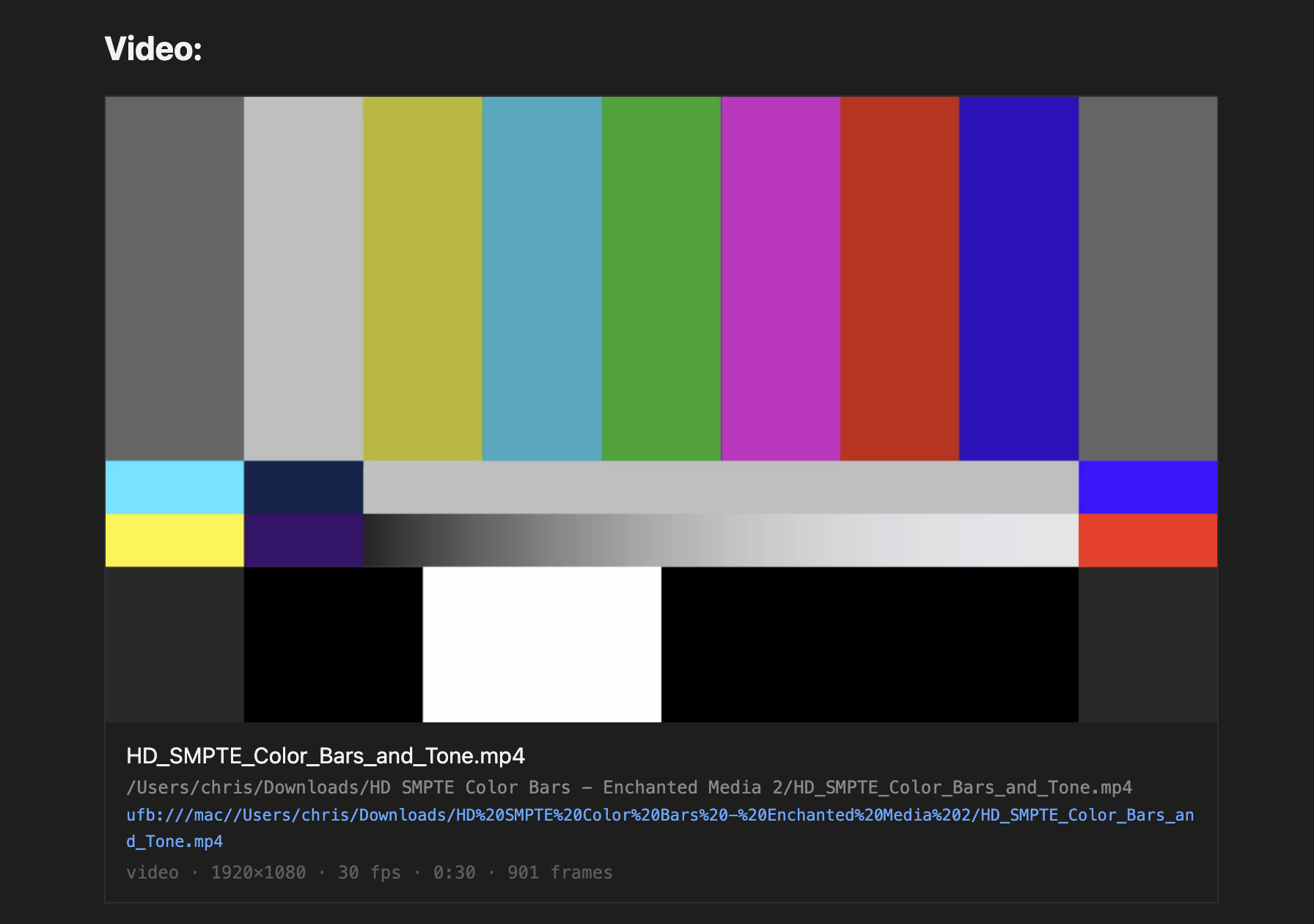
Images always collect into the export (sandboxed viewers can’t read absolute paths); videos and other large files stay pointers by design.