Editing
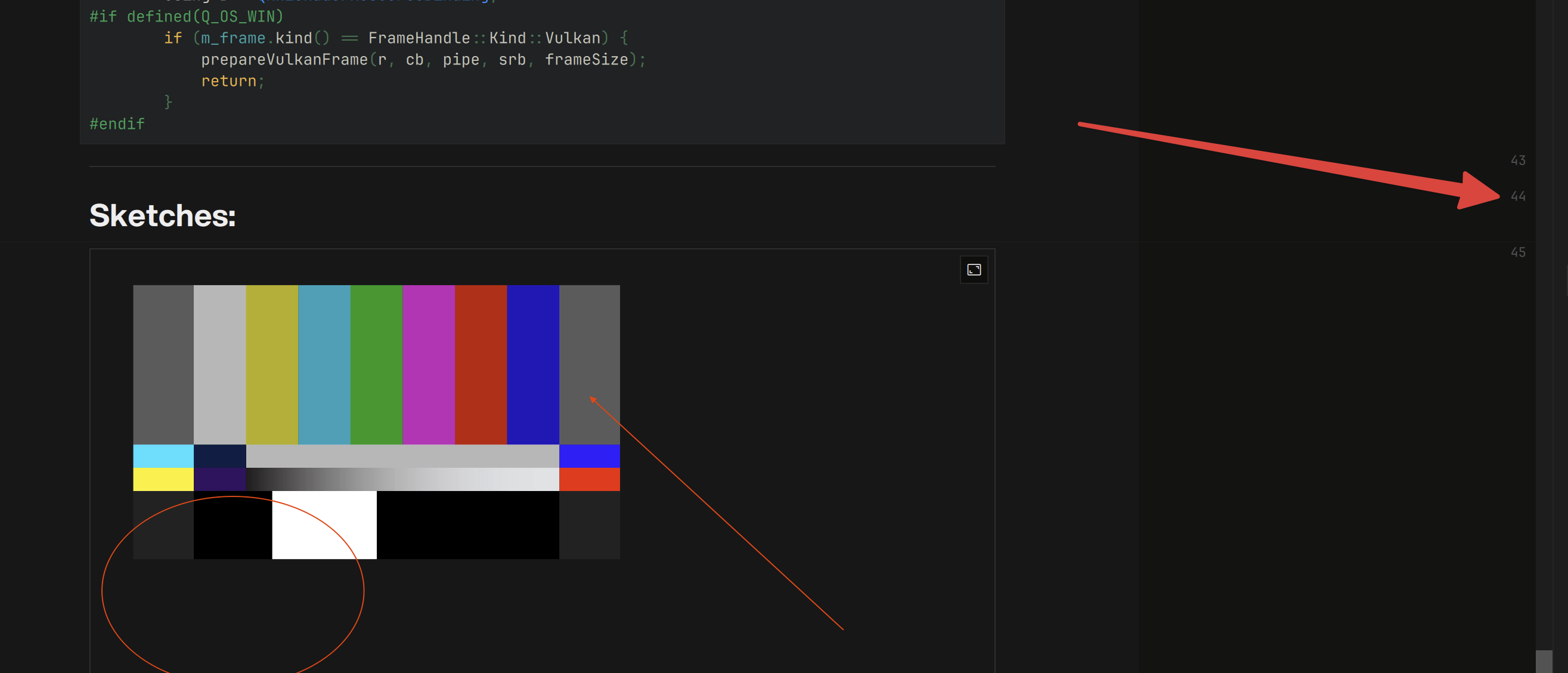
A note is a list of blocks. Press Enter to start a new block, Backspace at the start of an empty block to merge it up. Grab the number to the far right of a block and drag to rearrange blocks.
Markdown-Style Triggers
Type these at the start of a block and it converts as you go:
| Type this | Becomes |
|---|---|
# … ###### | Heading 1–6 |
> | Quote |
- , * , + | Bullet list item |
- [ ] / - [/] / - [x] | Task (to-do / doing / done) |
1. (any number) | Numbered list item |
``` or ```lang then Enter | Code block (optionally for a language) |
--- / *** / ___ then Enter | Divider |
List items nest with Tab / Shift+Tab.
Every code block carries a small language chip in its top-right corner — click it to pick the syntax highlighting from the full language list (type to filter). The ```lang fence tag still works if you prefer typing it.
The Page
The page is a steady reading measure — it never squeezes. A narrow window scrolls sideways instead of rewrapping your text; a wide table extends past the page into the margin.
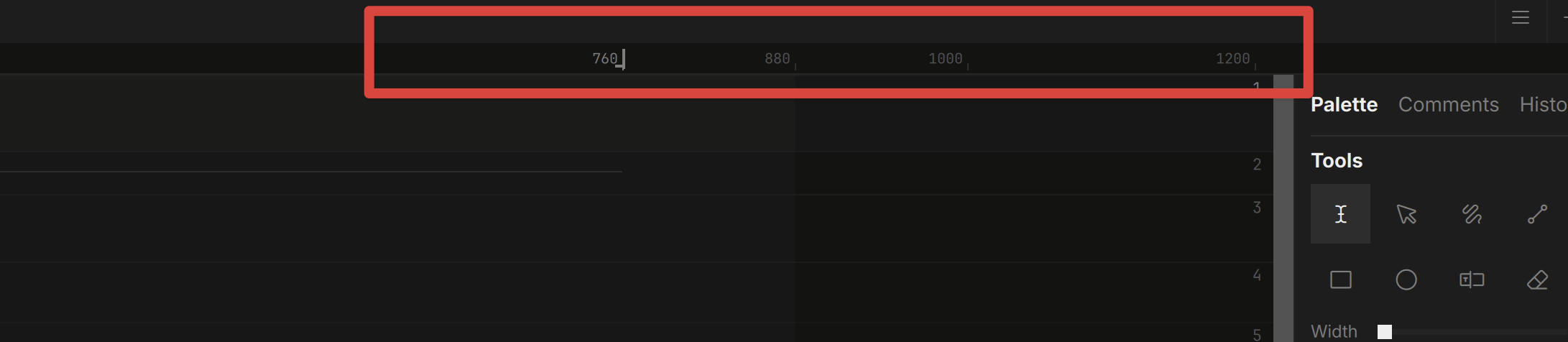
Each note has its own page width. The slim ruler above the page shows the stops (760 up to 1600) — drag the handle or click a stop; the page reflows live and one Undo puts it back. Margin ink rides along as the page widens. Pick a wide page for image boards, the classic measure for prose.
Down the right side runs the block ruler: every block’s number, a shared address you can reference anywhere (“see block 14” — the numbers also appear in exports). Drag a number to reorder its block; an accent line shows where it will land.
Inline Formatting
Select text and use a shortcut or the Inspector — bold, italic, code, underline, strikethrough, links (⌘K). Clear formatting on a selection with ⌘\.
Colors
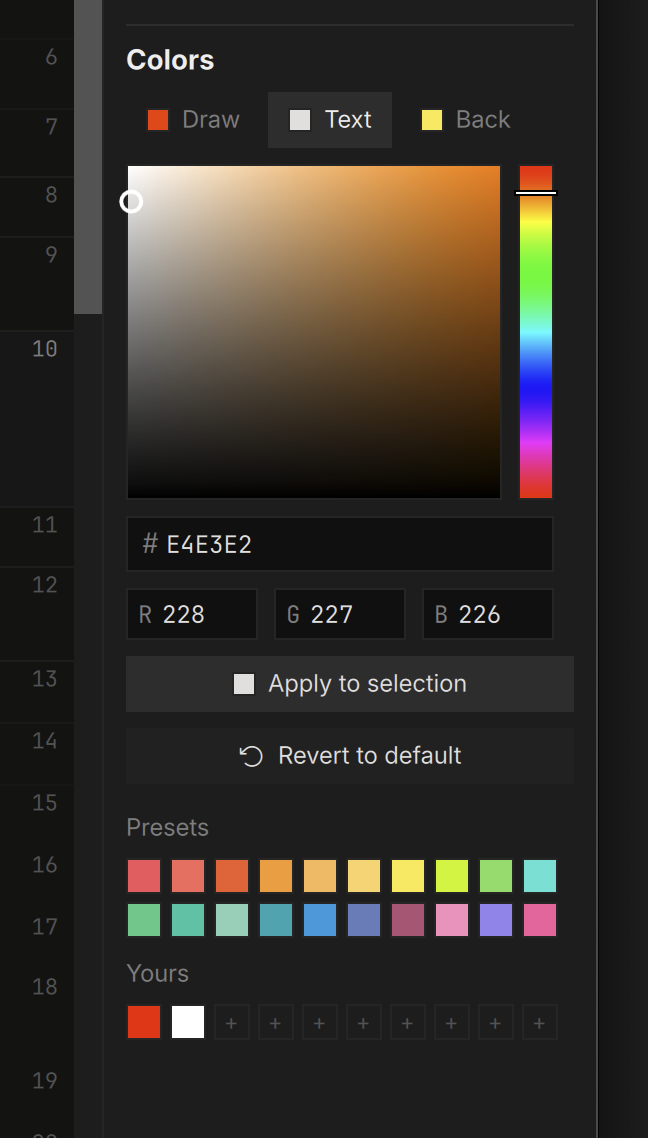
The Inspector’s palette has three tabs: Draw (annotations) Text (text color) and Back (background). Pick a swatch with text selected to color it; with nothing selected the color arms as a pen for what you type next. The same palette colors table selections — whole rows and columns included (see Tables). Revert clears both back to default.
Choice Chips
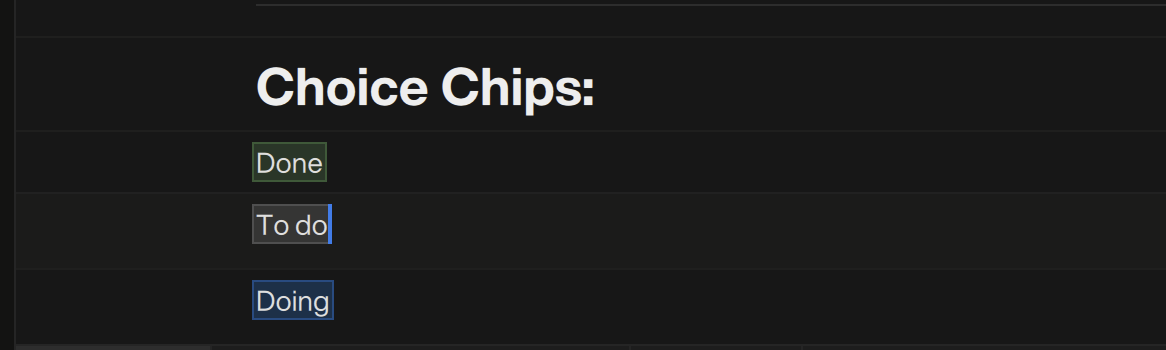
⌥⌘C inserts an inline choice chip — To do / Doing / Done — anywhere in text, including inside table cells. Click the chip to change its state; the chip travels with the text through exports.
Undo & History
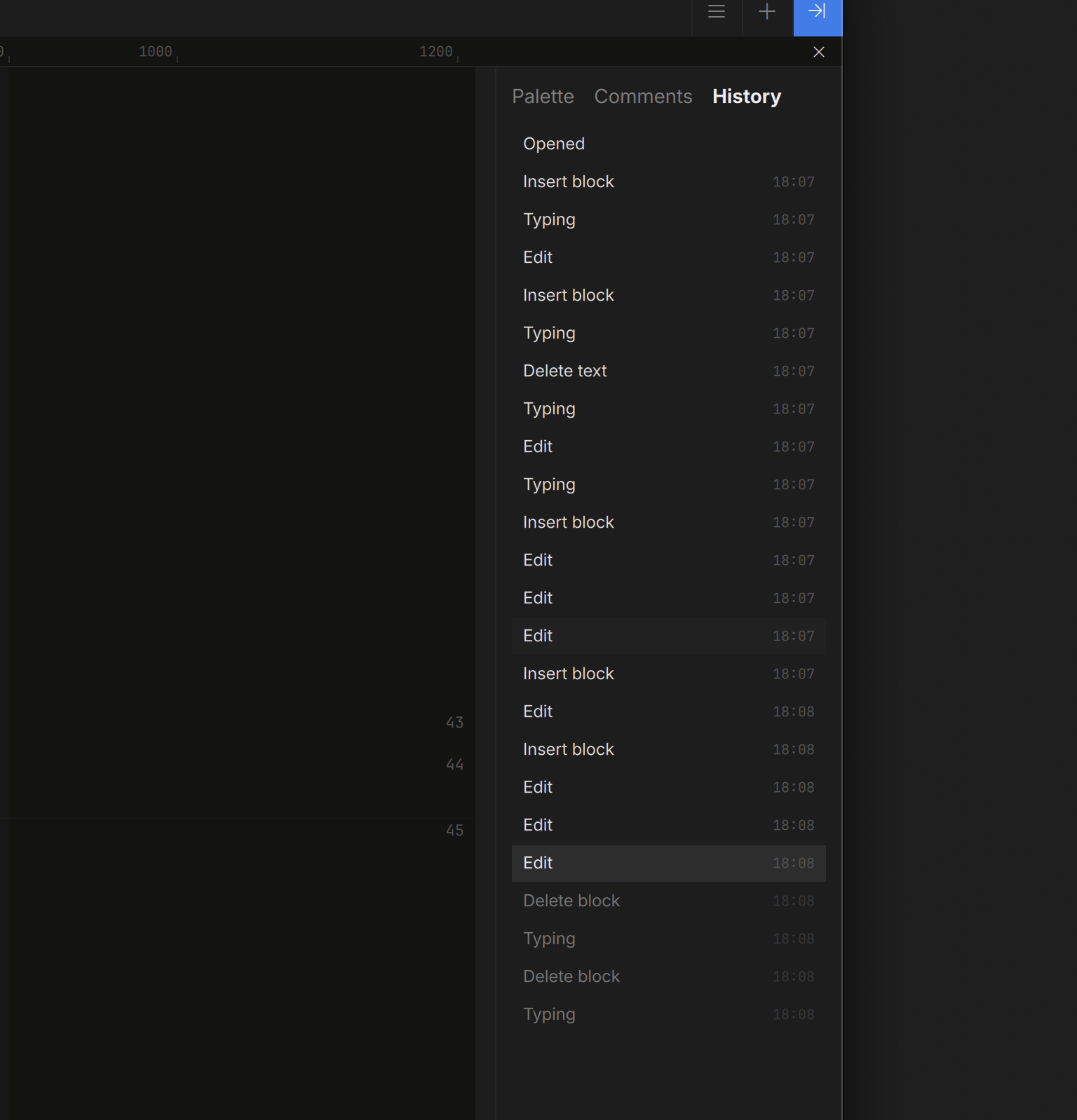
Every gesture is one undo step — a bulk table edit, a whole tab merge, a run of image-resize nudges all take a single ⌘Z. The Inspector’s History view shows the note’s timeline: click any entry to time-travel the document to that state (and forward again).